

In today’s competitive digital environment, social media marketing is no longer about posting consistently and hoping for the best. Successful brands understand that clear goals and well-structured strategies are the foundation of effective social media marketing.
While creative content attracts attention, it is goals and strategies that give direction, purpose, and measurable outcomes.

The Importance of Goals in Social Media Marketing
Social media marketing goals define what a brand wants to achieve through its social media presence. These goals should always align with overall business objectives and provide clear direction for marketing efforts.
Common social media marketing goals include:
- Increasing brand awareness and visibility
- Building trust and strengthening brand preference
- Generating leads or acquiring new customers
- Improving customer engagement and support
- Encouraging loyalty and repeat interaction
Without clearly defined goals, social media activities often become inconsistent and difficult to evaluate. Goals ensure that every campaign, post, and interaction serves a specific purpose.
From Goals to SMART Objectives
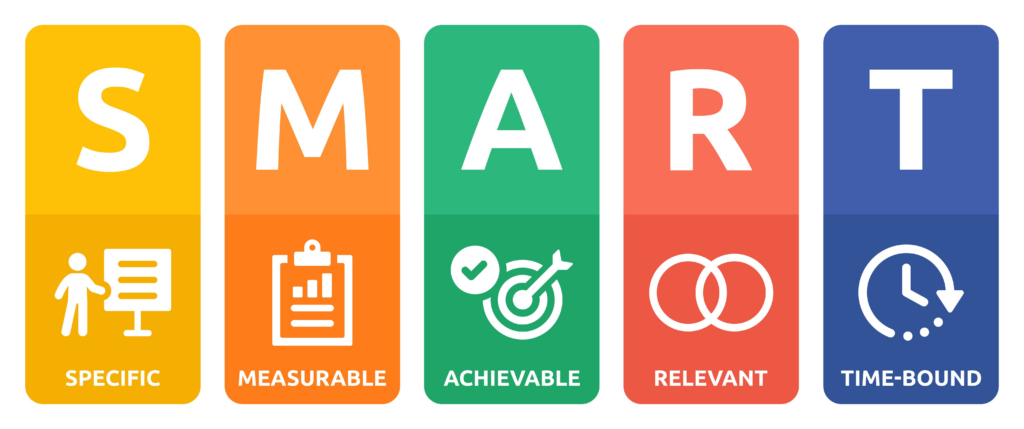
To effectively measure success, goals must be translated into SMART objectives. SMART objectives help marketers track progress and assess performance accurately.
SMART objectives are:
- Specific – clearly defined and focused
- Measurable – supported by data and metrics
- Achievable – realistic based on resources
- Relevant – aligned with business priorities
- Time-bound – set within a specific timeframe
For example, instead of setting a general goal such as increasing engagement, a SMART objective would be to increase Instagram engagement rate by 15% within three months.
The Role of Strategy in Social Media Marketing
While goals define the destination, strategies determine how those goals will be achieved. A social media marketing strategy outlines the overall approach a brand uses to reach its audience and deliver value.
Effective strategies are built by considering:
- Insights gained from social listening
- Understanding the target audience’s behavior and preferences
- Selecting platforms that best suit the business and audience
- Planning content that is relevant, valuable, and engaging
Strategies should remain flexible and adaptable as audience behavior, algorithms, and trends evolve.

The 8 C’s Framework for Strategy Development
One proven approach to developing social media strategies is the 8 C’s framework, which helps brands move beyond simple promotion and focus on relationship building.
- Categorize – Identify which social media platforms best reach the target audience
- Comprehend – Understand how each platform works, including trends and user behaviour.
- Converse – Engage in two-way communication instead of one-way promotion
- Collaborate – Work with customers, influencers, and communities to expand reach
- Contribute – Share consistent, valuable, and informative content
- Connect – Build relationships with key individuals and brands
- Community – Encourage audience participation through discussions, polls, and feedback
- Convert – Turn engagement into meaningful outcomes such as leads, sales, or advocacy
Aligning Goals and Strategies with Call to Action (CTA)
Goals and strategies must always lead audiences toward a clear Call to Action (CTA). CTAs represent the desired action a brand wants users to take after engaging with content.
Examples of effective CTAs include:
- Visiting a website or blog
- Subscribing to a newsletter
- Downloading resources or registering for webinars
- Contacting a sales team or making a purchase
Clear CTAs connect social media engagement to real business results, making performance easier to measure.
Measuring Success Through the Right Metrics
To understand whether goals and strategies are effective, brands must track relevant metrics. These metrics typically fall into three categories:
- Program metrics – Metrics directly linked to campaign objectives
- Channel metrics – Platform-specific indicators such as likes, comments, and shares
- Business metrics – Metrics that show business impact, including leads, conversions, and sales
When metrics align with goals, brands can make informed decisions and continuously improve their strategies.

From Self-Promotion to Building Brand Advocates
Strong social media strategies focus not only on promotion but also on building relationships. When customers feel valued and understood, they are more likely to become brand advocates who willingly recommend the brand to others.
This shift from self-promotion to advocacy strengthens credibility and supports long-term growth through word-of-mouth influence.
Conclusion
Social media marketing success is driven by intention, not popularity. By setting clear goals, developing thoughtful strategies, and continuously measuring performance, brands can transform social media platforms into powerful tools for sustainable business growth.